Easy Perler Bead Patterns With Printable Grids
Choose from eight original fruit, leaf, shape and animal designs. Each comes with a printable grid, a color key and an exact bead count.
8 patterns
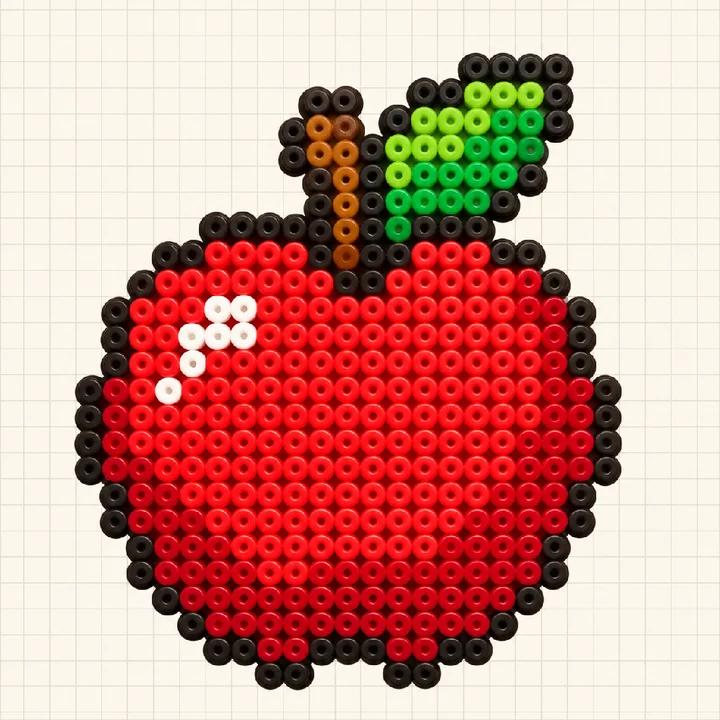
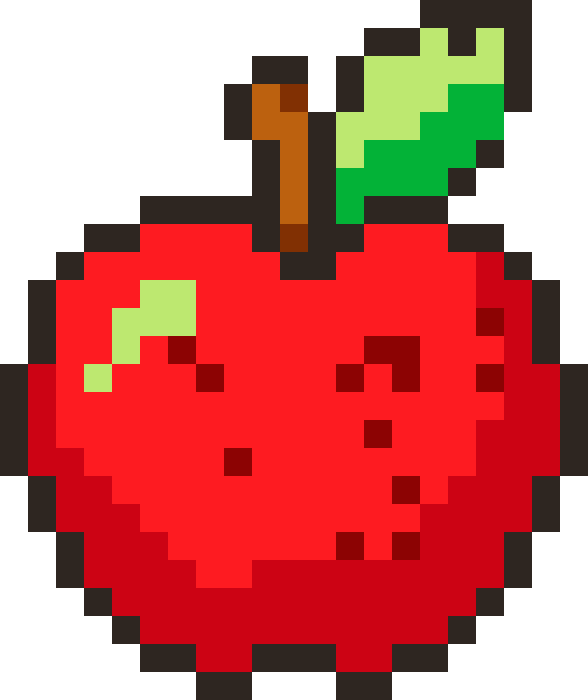
Apple
21 × 25 · 8 colors · 355 beads
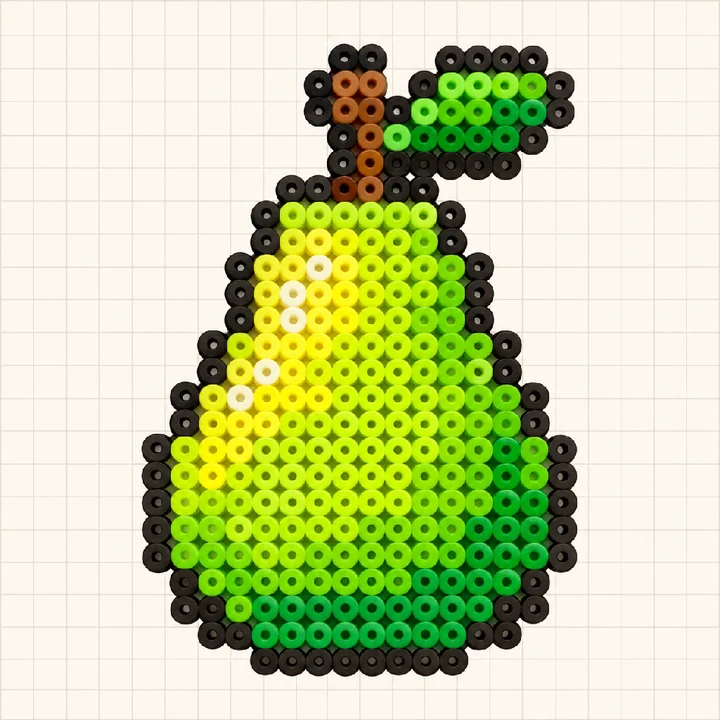
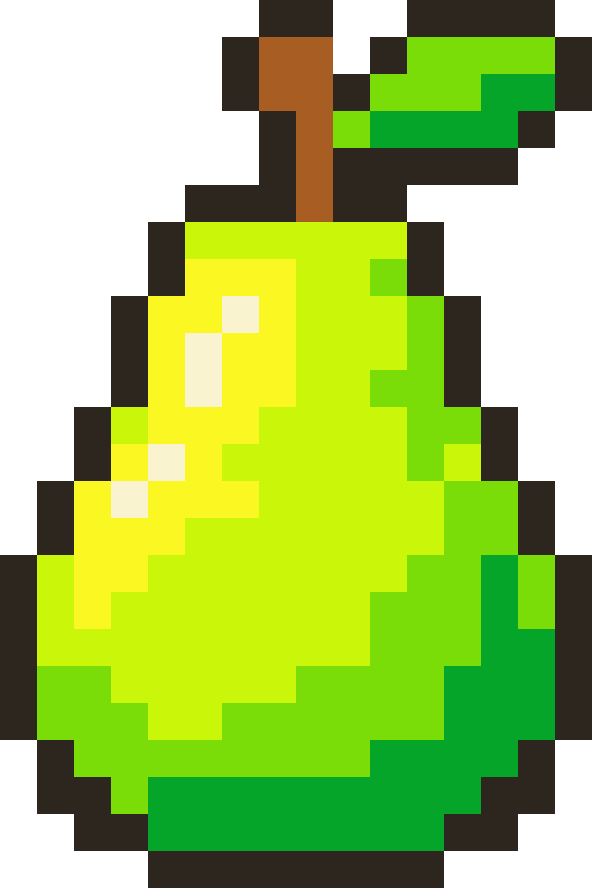
Pear
16 × 24 · 7 colors · 272 beads
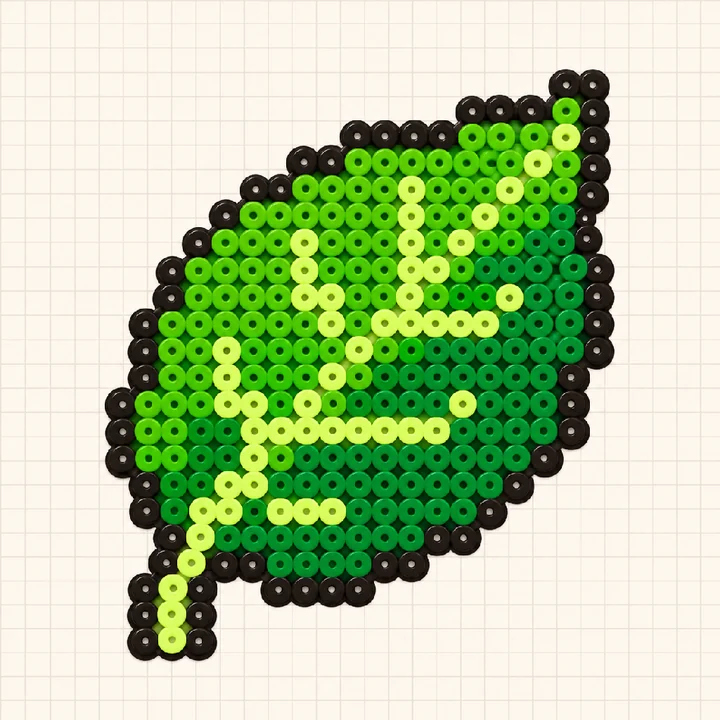
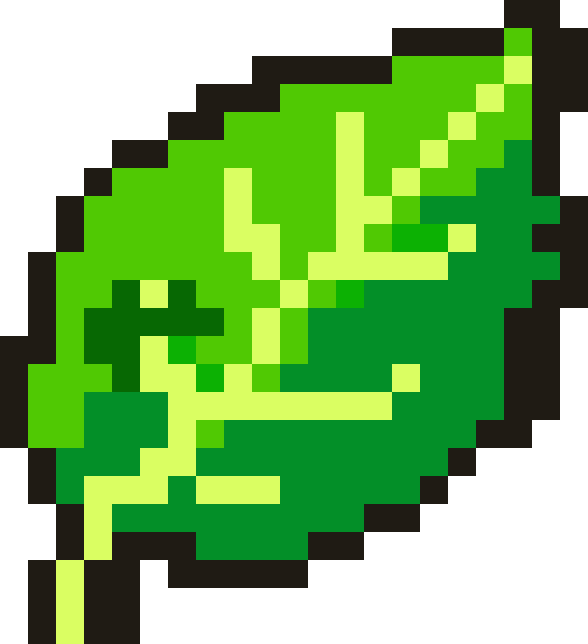
Leaf
21 × 23 · 6 colors · 330 beads
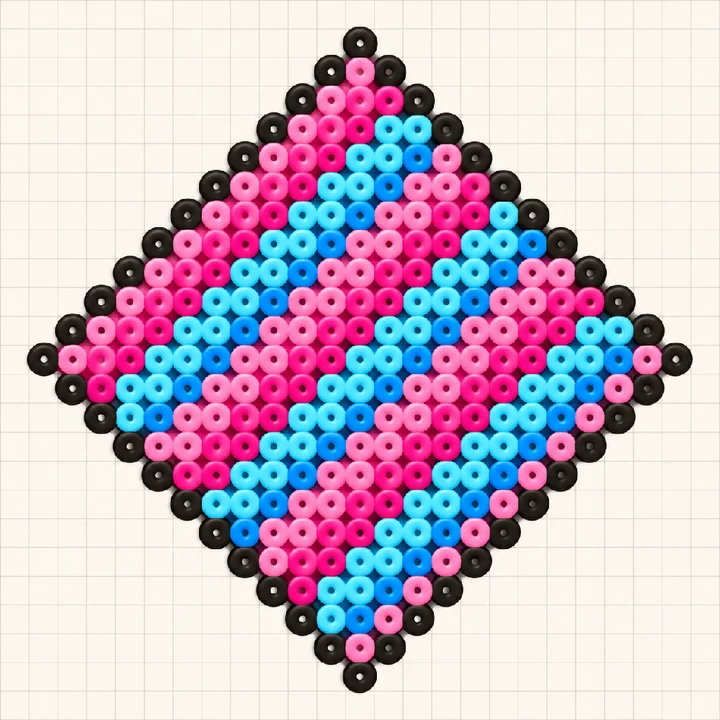
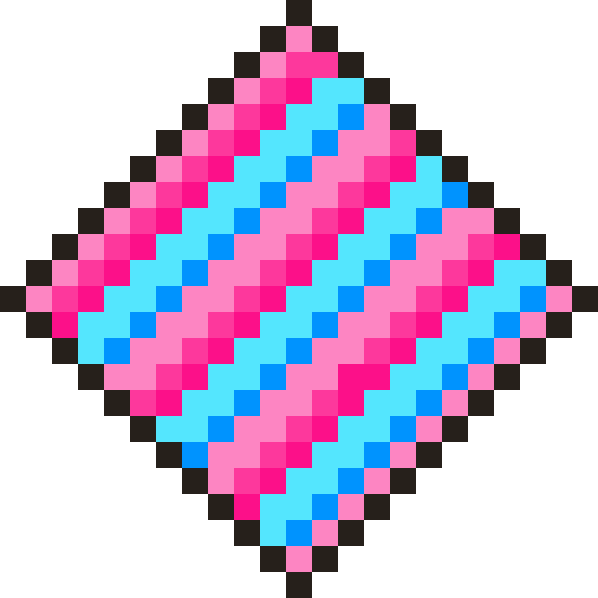
Striped diamond
23 × 23 · 6 colors · 265 beads
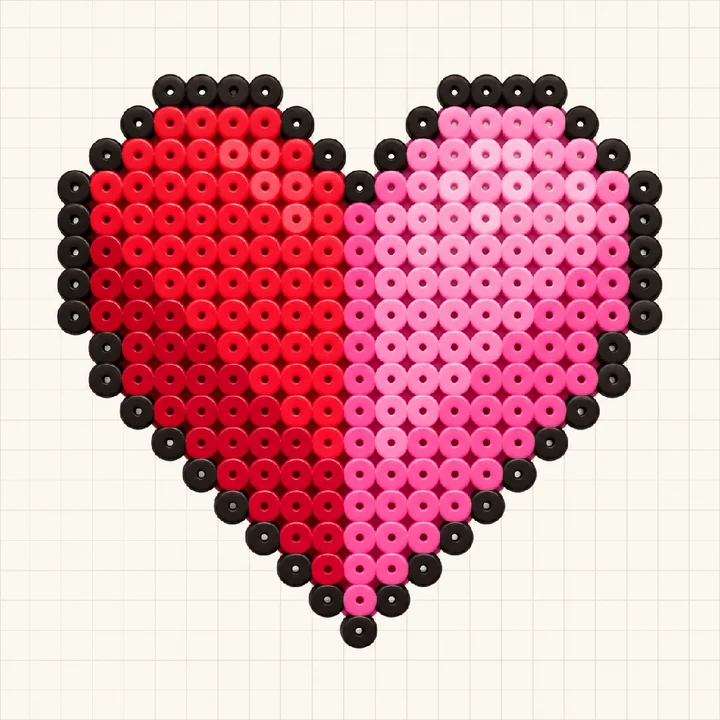
Two-tone heart
19 × 18 · 7 colors · 229 beads
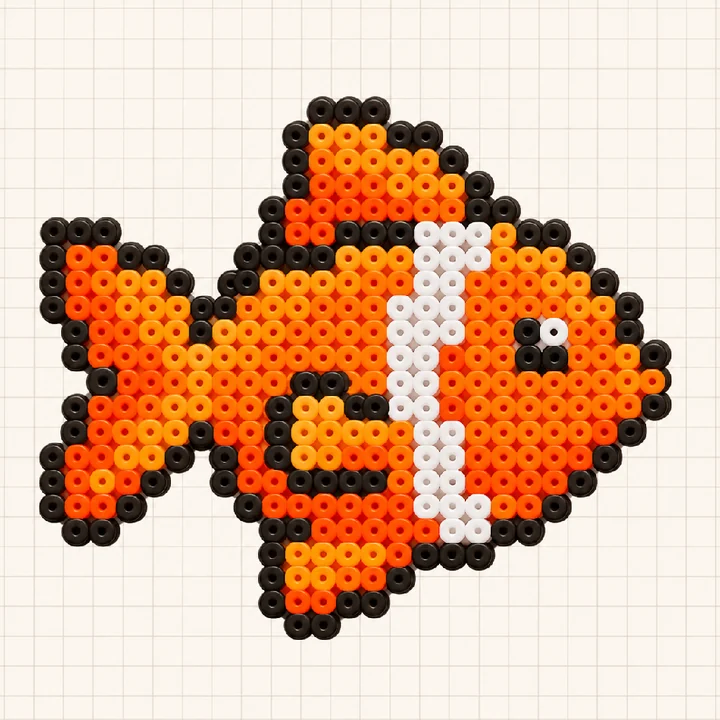
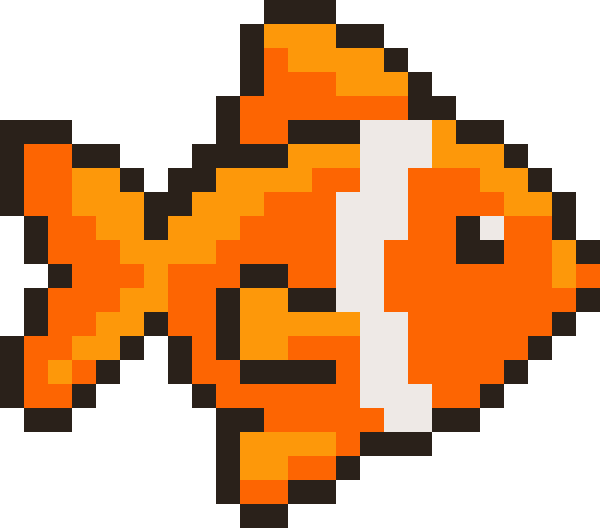
Little fish
25 × 22 · 4 colors · 325 beads
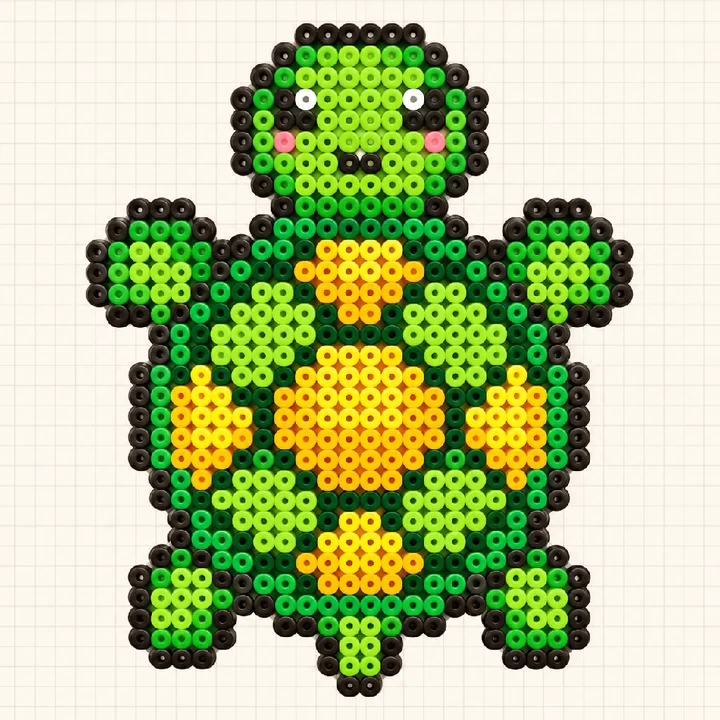
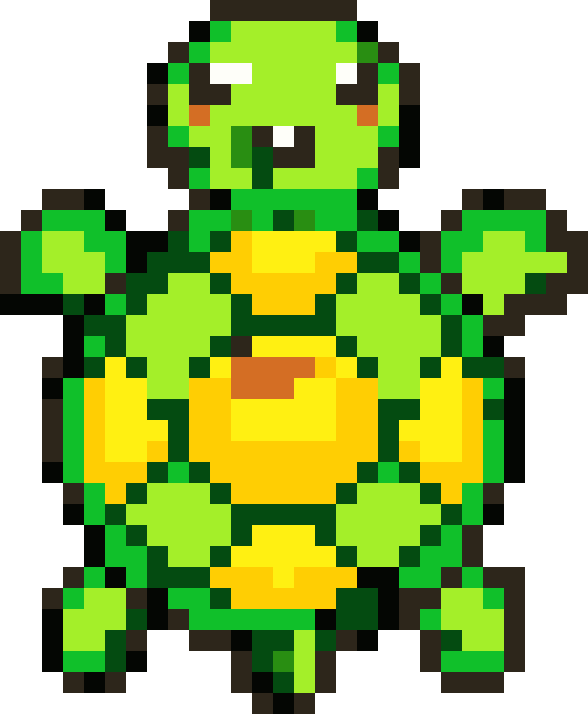
Turtle
28 × 34 · 10 colors · 629 beads
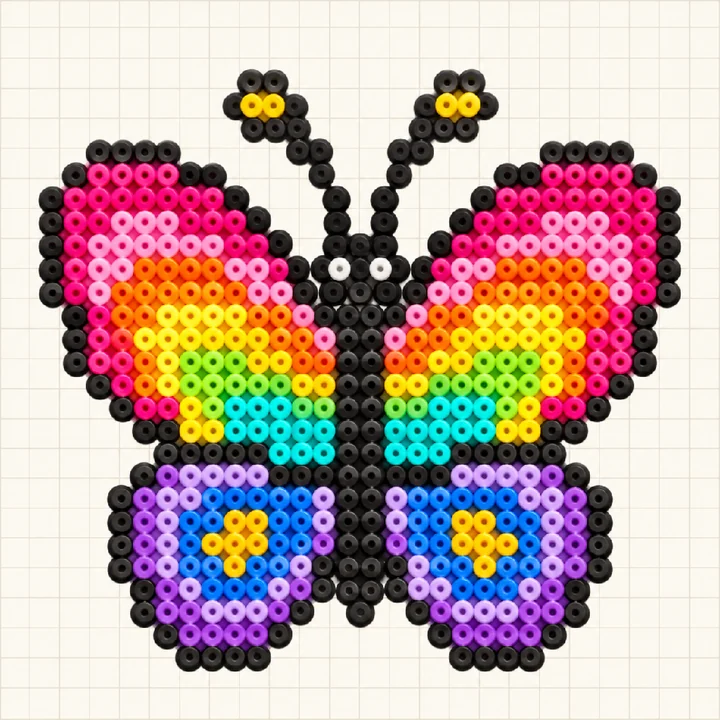
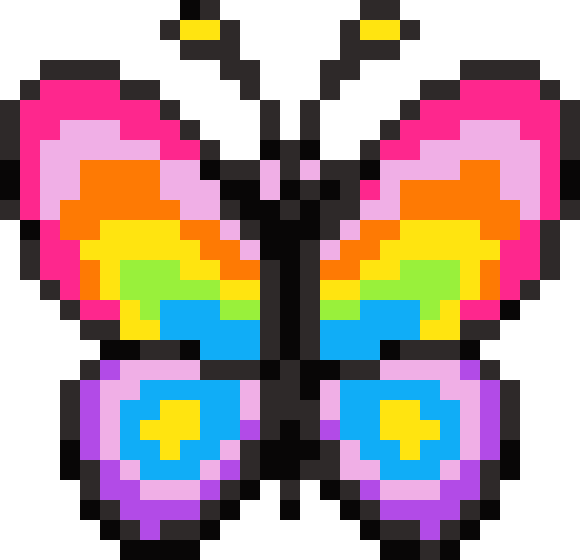
Butterfly
29 × 28 · 9 colors · 561 beads
These easy Perler bead patterns for beginners give you eight original designs to copy from a numbered grid: two fruits, a leaf, two shapes and three animals. Start with the two-tone heart for a simple color change and the lowest bead count, or the little fish for the shortest color key.
Each pattern includes a free printable PDF with a lettered color key and bead totals.
Easy Perler Bead Patterns to Try
Looking for cute Perler bead patterns without a long supply list? These Perler bead ideas use four to ten colors each, and the key above every pattern lists them all. Color names below describe the chart palette, not specific product codes. Choose suitable shades from your own beads; screen and bead colors can differ.
How to read the grids: one lettered square means one bead. A blank square means no bead, even when the design uses white. Each letter matches the color key above the pattern and on the first page of its PDF. Read rows from top to bottom and columns from left to right, using the numbers along the edges of the chart.
1. Apple
21 × 25 beads · 8 colors · 355 beads.
K = black (#2E2621, 80); A = red (#FE1B21, 140); B = red 2 (#CC0314, 79); C = lime (#BDE870, 21); D = green (#03B237, 14); E = dark red (#8C0303, 13); F = dark orange (#BC610F, 6); G = dark red 2 (#813003, 2)
Two reds give the apple its rounded look, with a pale highlight near the top. Keep the green leaf and brown stem separate when counting the top rows; they are part of the 355-bead total.
Download the apple pattern sheet (PDF)
2. Pear
16 × 24 beads · 7 colors · 272 beads.
K = black (#2C261F, 71); A = yellow (#CAF609, 71); B = lime (#7BDD07, 54); C = green (#04A529, 37); D = yellow 2 (#FAF722, 27); E = dark orange (#A85E22, 7); F = cream (#F9F3CF, 5)
This pear follows the same idea as the apple, with yellow-green shades replacing red. Its narrower neck widens into a rounded base. Follow the blank cells at the edges instead of filling the whole rectangle.
Download the pear pattern sheet (PDF)
3. Leaf
21 × 23 beads · 6 colors · 330 beads.
K = black (#1F1B14, 81); A = dark green (#038F28, 92); B = green (#50C903, 89); C = yellow (#DAFE62, 53); D = dark green 2 (#076803, 10); E = green 2 (#0CB103, 5)
The leaf uses two greens with a pale yellow-green vein. Follow the vein diagonally through the shape, counting the full row each time so the vein does not drift.
Download the leaf pattern sheet (PDF)
4. Striped diamond
23 × 23 beads · 6 colors · 265 beads.
K = black (#26201B, 44); A = pink (#FD85C2, 64); B = sky blue (#54E6FE, 63); C = hot pink (#FC1089, 32); D = hot pink 2 (#FD389C, 31); E = blue (#0093FE, 31)
Pink and blue stripes run diagonally across the diamond inside a dark outline. The middle row is the widest. After it, the outline narrows in the reverse order, giving you an easy way to check your placement.
Download the striped diamond pattern sheet (PDF)
5. Two-tone heart
19 × 18 beads · 7 colors · 229 beads.
K = black (#28201C, 46); A = red (#F7142E, 49); B = pink (#FD92C3, 45); C = hot pink (#FC559D, 45); D = red 2 (#CA0122, 31); E = light pink (#FDBFDB, 8); F = coral (#FB4D5F, 5)
This is a useful first choice if you want just one main color change: red on the left half, pink on the right. The blank notch between the two lobes is intentional; leave those pegs empty.
Download the two-tone heart pattern sheet (PDF)
6. Little fish
25 × 22 beads · 4 colors · 325 beads.
K = black (#2A211A, 93); A = orange (#FD6402, 133); B = orange 2 (#FD980B, 67); C = white (#EEE9E7, 32)
The black eye sits near the front of the head, and the white stripe crosses the orange body behind it. Pay attention to the empty cells between the tail tips and body; filling them changes the silhouette.
Download the little fish pattern sheet (PDF)
7. Turtle
28 × 34 beads · 10 colors · 629 beads.
K = black (#040603, 54); A = lime (#A4EF29, 148); B = black 2 (#2D261B, 96); C = dark green (#044B11, 92); D = green (#10C02A, 90); E = yellow (#FFCE03, 76); F = yellow 2 (#FFF012, 54); G = dark orange (#D46E24, 9); H = green 2 (#298E12, 6); J = white (#FEFEF9, 4)
Build the green shell plates around the yellow center plate, then count the light-green head and feet from the chart. Ten colors make this the busiest choice in the set.
Download the turtle pattern sheet (PDF)
8. Butterfly
29 × 28 beads · 9 colors · 561 beads.
K = black (#080606, 65); A = black 2 (#2E2929, 137); B = light pink (#F0AFE6, 84); C = hot pink (#FE278D, 61); D = turquoise (#10ADF7, 60); E = yellow (#FFE410, 54); F = orange (#FE7A04, 47); G = purple (#B24BE7, 31); H = lime (#99F03B, 22)
The wings mirror one another around the black body. Match the rainbow bands and blue spots on both sides and preserve the empty gaps around the wing edges. At 561 beads, only the turtle uses more.
Download the butterfly pattern sheet (PDF)
Choose a Pattern by Grid Size and Bead Count
The dimensions below are columns × rows, including empty cells inside the rectangular chart. They tell you how many peg positions you need across and down, not how many beads to buy. For example, the 23 × 23 diamond covers 529 grid positions but uses only 265 beads.
| Pattern | Grid | Beads | Colors | What to practice |
|---|---|---|---|---|
| Apple | 21 × 25 | 355 | 8 | Stem and highlight placement |
| Pear | 16 × 24 | 272 | 7 | Following a curved outline |
| Leaf | 21 × 23 | 330 | 6 | A diagonal vein |
| Striped diamond | 23 × 23 | 265 | 6 | Matching mirrored rows |
| Two-tone heart | 19 × 18 | 229 | 7 | One main color change |
| Little fish | 25 × 22 | 325 | 4 | Tail gaps and a single eye |
| Turtle | 28 × 34 | 629 | 10 | Counting ten colors |
| Butterfly | 29 × 28 | 561 | 9 | Matching both wings |
For one pattern at a time, a large square pegboard of 29 × 29 pegs fits every design except the 34-row turtle, which needs a second board joined below the first. Check the peg count on your board and use beads made for its size system. The counts here do not establish a finished size in inches or centimeters.
What makes these Perler bead patterns easy?
Each design uses a short color key and a compact grid. Difficulty is not just the total bead count: the 265-bead diamond repeats a mirrored shape, while the 629-bead turtle asks you to track ten colors. Choose by the kind of counting you prefer, not just the smallest total.
Before fusing, compare each completed row with the chart, using the row numbers along its edge. Check white cells, intentional gaps and any single black eye separately. This catches a missed bead without recounting the entire design.
Download the Printable Pattern Sheets
Download all 8 printable Perler bead patterns (PDF) — two pages per design (the color key, then the numbered chart), in the same order as this article. You can also use the individual PDF link beneath each pattern.
- Paper: the file uses US Letter pages. Print one page per sheet; Fit to page also works on A4 for reading and counting.
- Scale: these are enlarged counting charts, not life-size templates to line up under a pegboard. Read the coordinates beside your board instead.
- Color or grayscale: use the letters and color names together. The letter remains the reference if two shades print similarly.
For fusing, follow the instructions supplied with your beads. Perler specifies that an adult should do this step; its standard fusing instructions explain the ironing paper, heat-safe surface and cooling steps.
Want a pattern based on your own image instead of a ready-made motif? Use the Perler bead pattern maker for that separate task.