Small Perler Bead Patterns With Printable Grids
Six nature motifs, each under 310 beads. Compare their footprints, count out a shared color tray, and print the exact chart pages you need.
6 patterns
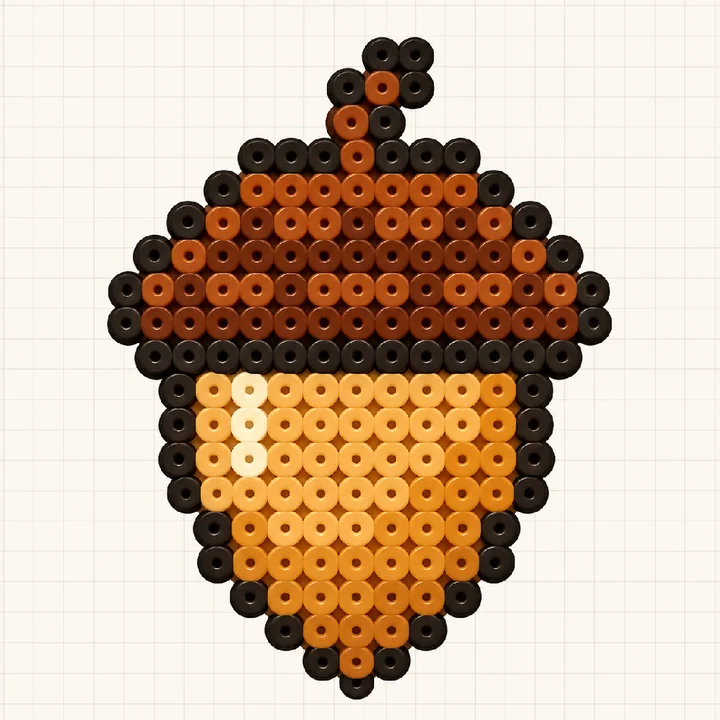
Acorn
15 × 20 · 6 colors · 168 beads
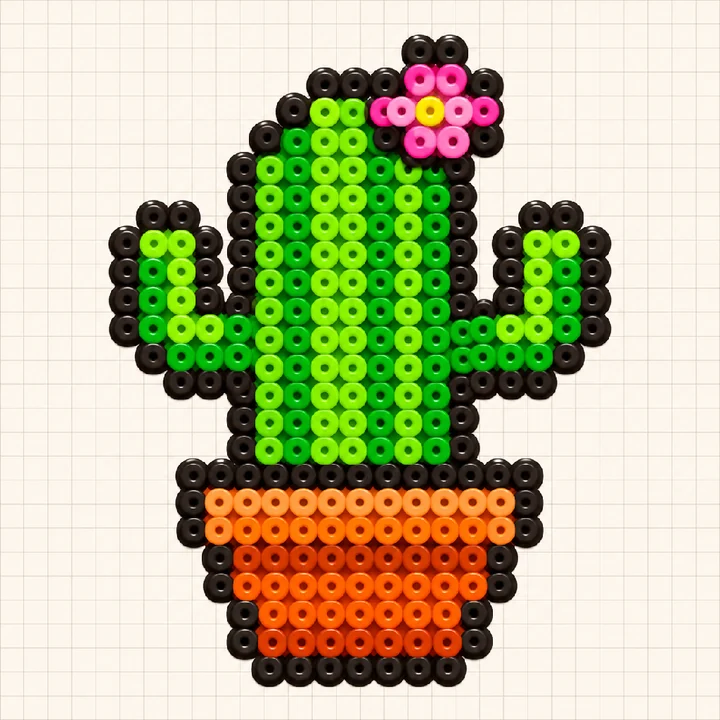
Potted cactus
18 × 23 · 7 colors · 266 beads
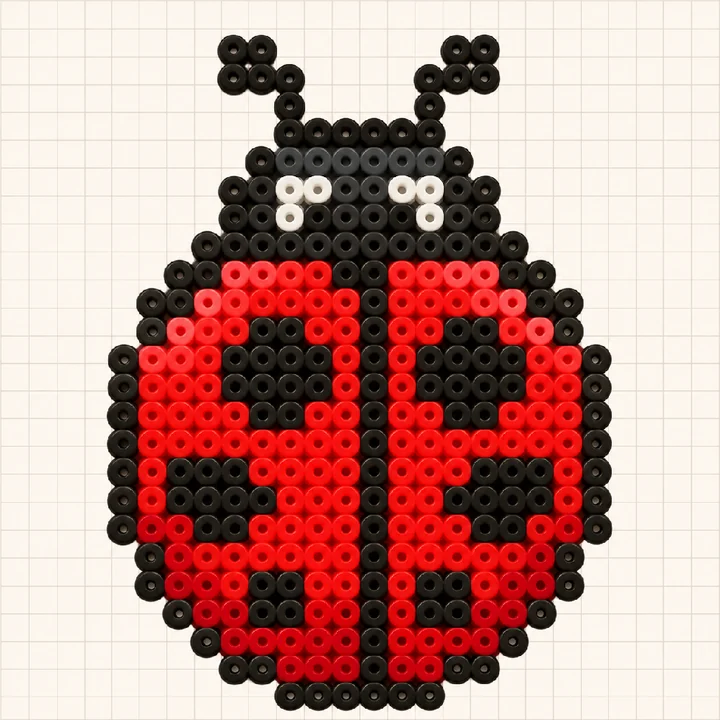
Ladybug
18 × 24 · 6 colors · 304 beads
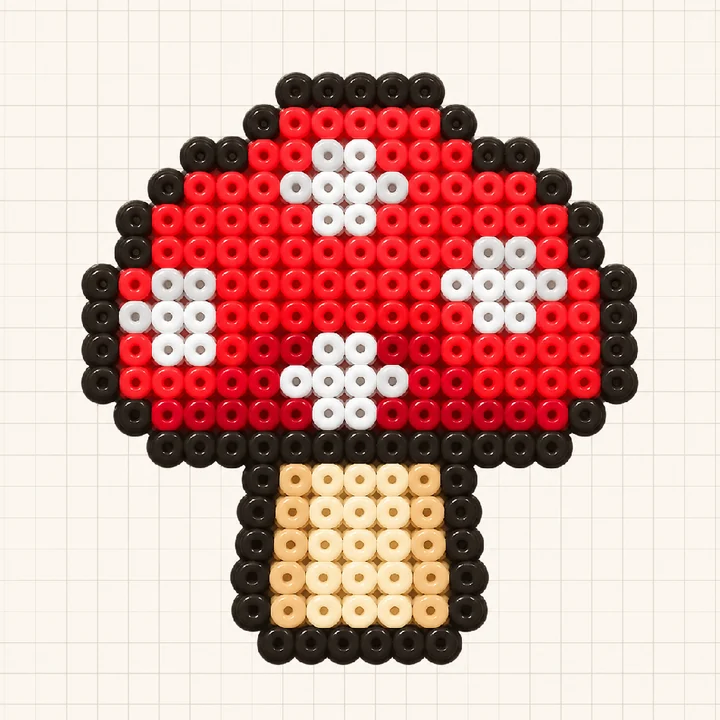
Spotted mushroom
17 × 18 · 7 colors · 205 beads
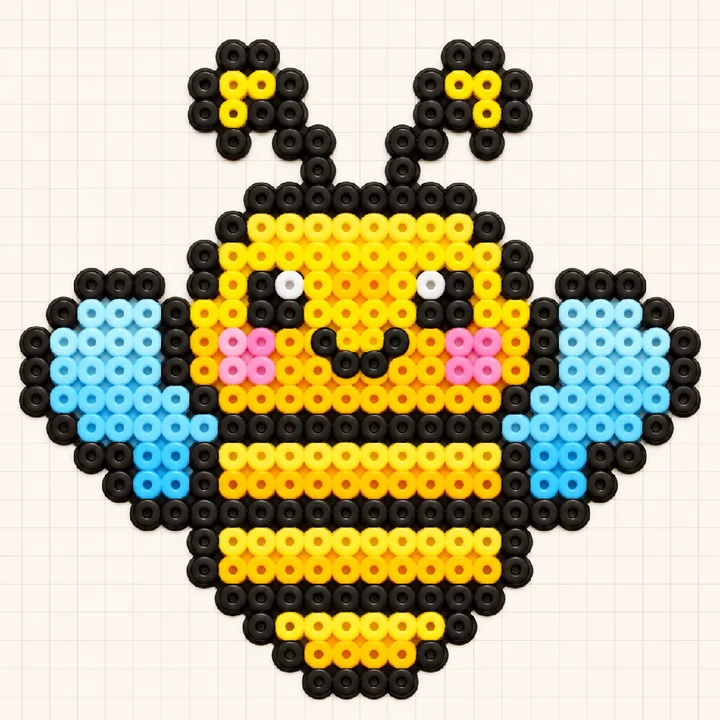
Striped bee
24 × 23 · 5 colors · 298 beads
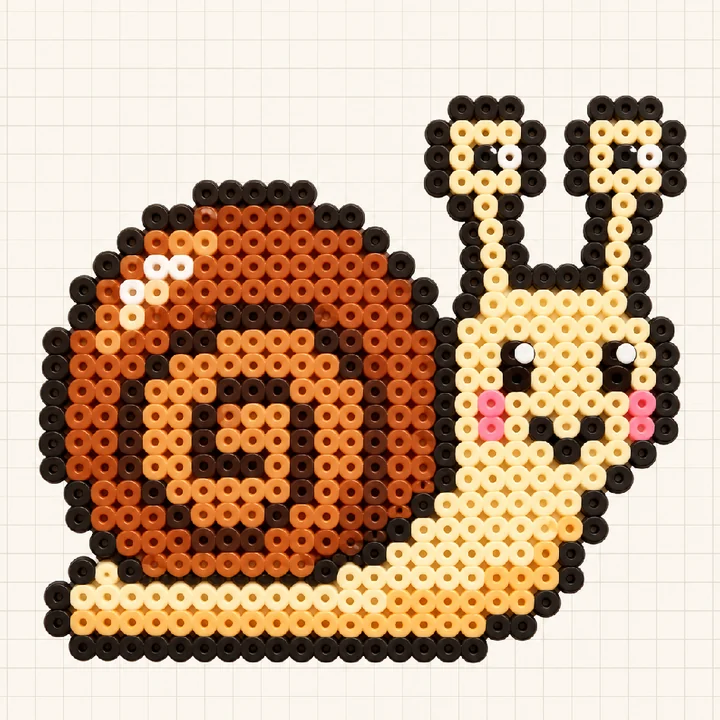
Garden snail
19 × 17 · 6 colors · 241 beads
A small patch of empty pegs can be enough for a complete motif. These small Perler bead patterns use 15–24 columns, 17–24 rows and between 168 and 304 beads apiece. The six drawings form a nature collection: an acorn, potted cactus, ladybug, spotted mushroom, striped bee and garden snail.
Choose by the space available on your square pegboard, then use the chart's letters to count out colors. The free PDF collection includes a color key with exact bead counts and a separate numbered grid for every motif.
Small Patterns by Grid Size
This collection uses a maximum of 24 × 24 grid positions as its definition of small, so every motif fits a standard small square pegboard with room to spare. That is a size limit for these designs, not a required bead type. None of the motifs repeats the earlier easy Perler collection.
| Motif | Columns × rows | Beads | PDF page |
|---|---|---|---|
| Acorn | 15 × 20 | 168 | 1–2 |
| Potted cactus | 18 × 23 | 266 | 3–4 |
| Ladybug | 18 × 24 | 304 | 5–6 |
| Spotted mushroom | 17 × 18 | 205 | 7–8 |
| Striped bee | 24 × 23 | 298 | 9–10 |
| Garden snail | 19 × 17 | 241 | 11–12 |
A clear rectangular area of 24 columns by 24 rows accommodates any one of the six charts. They are not a combined layout: making several at once requires extra space. To use leftover room on a partly filled board, count the open columns and rows in that spot rather than the board's overall size.
Easy mini Perler bead patterns: what “mini” means here
Here, “mini” describes a compact picture. Perler Mini beads are a separate product size, with matching pegboards; Perler states that its Mini Beads pegboards are not for standard-size beads. These charts do not establish Mini-product compatibility or a finished measurement in inches. Select the board for the beads you actually have.
Acorn — 15 × 20
Download the acorn chart (PDF)
The brown cap sits on an amber nut with a small cream highlight. The highlight is the smallest color group; replacing it with amber gives a simpler acorn.
Potted cactus — 18 × 23
Download the potted cactus chart (PDF)
Leave the empty cells between each arm and the trunk: they keep the arms separate. Each arm joins the trunk low down, and the flower sits on top.
Ladybug — 18 × 24
Download the ladybug chart (PDF)
The dark center seam runs down the middle of the shell, with black spots on both sides. The two white beads on the head mark the eyes.
Spotted mushroom — 17 × 18
Download the spotted mushroom chart (PDF)
The red cap is widest just above the stem. Its white spots are occupied cells, while the empty corners around the cap stay unfilled.
Striped bee — 24 × 23
Download the striped bee chart (PDF)
Dark stripes cross the yellow body. Keep the pale blue wing cells separate from the blank background, and the two antennae separate from each other.
Garden snail — 19 × 17
Download the garden snail chart (PDF)
The shell spirals in brown and orange above the long cream foot. The raised head and its two eye stalks need clear gaps between them.
Bead Counts and Color Keys
Each occupied cell carries a letter, including the pale cream and white cells. Only unlettered cells represent empty pegs. Read the numbered rows from the top down and check one completed row at a time against the chart.
The acorn illustrates why the footprint and supply count differ: its 15 × 20 rectangle has 300 positions, but only 168 contain beads. For the simpler version described above, put the three cream beads back and take three more amber instead; the total stays 168.
| Motif | Exact color quantities | Total |
|---|---|---|
| Acorn | K black: 53; A dark red: 29; B gold: 29; C dark orange: 28; D orange: 26; E cream: 3 | 168 |
| Potted cactus | K black: 14; A black 2: 81; B lime: 59; C green: 48; D dark orange: 42; E coral: 21; F yellow: 1 | 266 |
| Ladybug | K black: 152; A red: 94; B red 2: 30; C red 3: 14; D charcoal: 8; E white: 6 | 304 |
| Spotted mushroom | K black: 58; A red: 66; B white: 31; C red 2: 18; D cream: 15; E peach: 10; F dark red: 7 | 205 |
| Striped bee | K black: 128; A yellow: 75; B sky blue: 36; C yellow 2: 35; D mint: 24 | 298 |
| Garden snail | K black: 99; A cream: 62; B dark orange: 43; C orange: 24; D peach: 10; E dark red: 3 | 241 |
Prepare one tray for all six motifs
Making one of each original version takes 1,482 beads. Black outlines take the largest share, so start the tray with that color. Keep the cream and white groups separate if you want to reproduce the chart palette; they are close in appearance but have different letters.
These color names identify the drawings' swatches, not manufacturer shade numbers. A substitution is fine if the details remain distinct: for example, keep the snail's brown shell darker than its cream foot. The supply totals above contain no allowance for dropped beads or test pieces.
The source grids were checked for counts and connections through shared cell edges. In particular, the snail's raised head and the cactus arms have narrow joins, so iron those areas with care.
Print the Small Pattern Collection
Download the small pattern collection — twelve-page PDF
Each motif takes two pages, in the order shown above: its color key with bead counts, then its numbered chart. Enter the page range from the table in your print dialog instead of printing the entire set.
The PDF is laid out for US Letter. On A4, fit the page within the printable area. Its squares are deliberately enlarged for counting: changing the print scale will not make it a verified under-board template. Place the sheet beside your pegboard and follow the coordinates. In a grayscale print, use the cell letters and key rather than judging shades alone.
For the heating stage, use the instructions supplied with your bead product. Perler's standard fusing method assigns fusing to an adult.
A custom motif needs its own grid and count. The Perler bead pattern maker can create that starting chart from your image; check its footprint against the space you have before setting out the beads.